Scholarships for Twegashe Graduates
Before Twegashe School was founded, during discussions with Bushasha villagers about what kind of educational input would be most beneficial to their community, our first proposal was to establish a new secondary school, since there is no secondary school in the village. Most students who finish primary school in Bushasha continue their education at the community secondary school, Busilikya, in the neighboring village about three miles away. But Bushasha villagers lobbied for a new primary school instead, one that would teach in English and give kids a strong foundation. “What good is a secondary school,” they asked, “if our children don’t have the foundation they need to succeed in secondary school?”
Where next?
A concern about secondary school always lingered. Initially, we thought that if Twegashe students scored well in their national exams they would be selected to go to higher-quality government boarding schools. But we soon learned that spots at those schools are limited, and competition is fierce.
We considered the Busilikya option. When we suggested this possibility to some Twegashe students who were asking us about their path for the future, they said, “Students don’t learn there.” They’ve seen many young people graduate after four years at Busilikya only to return to the village with the same prospects their parents had had with only a grade seven education.
Not to judge unfairly, we made a visit to the school. What we saw corroborated this view. Classrooms are crowded, teachers are not comfortable with English, and teaching resources are very limited. Add to that the fact that typical entering students are ill-prepared, and it’s not surprising that many drop out or don’t do well enough to go on. We would have liked to think that the strong education our students received at Twegashe would carry them through the next four years so that even at a school like Busilikya they could do well enough to make it to the next level, and maybe even by their presence – with a better command of English and greater tendency to ask questions and participate in discussions – pull up the quality of education there to some degree. But the chance that they would instead get discouraged, not engage themselves fully, and lose whatever they had gained at Twegashe seemed too big a risk to take.
We considered also the possibility of CORE Tanzania working with Busilikya, providing learning resources, hiring extra teachers, and perhaps arranging for teacher training. But that also presented risks, especially the possibility that we would begin such a program with a supportive principal, only to have that principal transferred soon afterward – too little control over our investment.
The decision
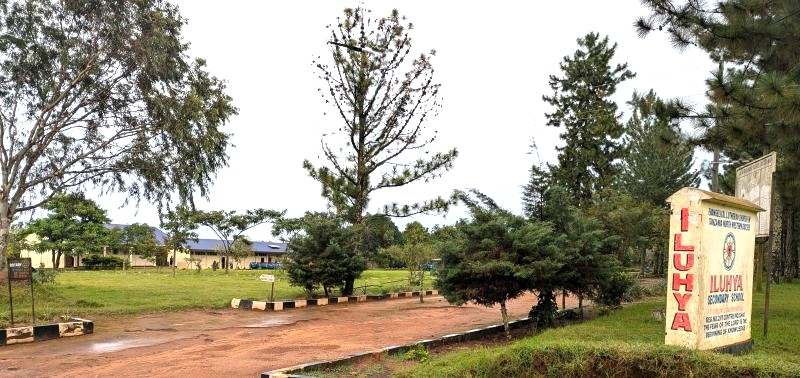
After much thoughtful deliberation, the CORE Tanzania board concluded that the best solution, at least for the near future, is for CORE to fund scholarships for our graduates to attend a nearby private secondary school where the quality of education is considerably higher than at Busilikya. The school we have selected is Iluhya Secondary School, located about ten miles from Bushasha. Iluhya is a boarding school run by the Tanzanian Lutheran church but accepting students from all faith backgrounds. Fees are somewhat less than at the average private school because they are trying to help local, rural families to further their children’s education. Because Iluhya students generally perform well on national exams, the school has developed a good reputation, and receives applicants from all over the country, despite their focus on recruiting from the local region.
MOU with Iluhya Secondary School
We are preparing to sign a Memorandum of Understanding (MOU) with Iluhya formalizing the agreement between our schools. According to this MOU, Iluhya will accept all graduating Twegashe students who pass the national exam and also pass Iluhya’s entrance exam. Contingent on the availability of funds, Twegashe will pay tuition and room and board for each of these students for their four years of secondary school. We have agreed not to fund students to attend any other secondary school. However, students who meet the criteria but choose to attend a vocational school rather than an academic secondary school like Iluhya would still be eligible for funding.
Finances
We are growing a dedicated scholarship reserve so that we can fulfil this commitment to our students. The cost for a full year at Iluhya is less than $850 – including room and board! Nevertheless, this is still a big undertaking financially, and the stakes are high. We don’t want to leave any child stranded midway through their secondary education because they lack funding.
Because of recent major changes in the Tanzanian government curriculum, primary school will end at grade six rather than grade seven beginning in 2028. As a result, two classes of Twegashe students will graduate at the end of 2027. We need to be ready with funding for a maximum of 60 students in 2028, 90 in 2029, 120 in 2030, and 150 in 2031. After that, the maximum number possible will remain steady at approximately 120 students on scholarship each year. We have made a good start on building this reserve, but there is still work to be done. If you would like to help secure a future for Twegashe graduates, donations specified for scholarships are very much welcomed. You can donate here!
Twegashe teachers were delighted to learn about this scholarship program. They were very grateful to CORE Tanzania and CORE Tanzania supporters for making this wonderful commitment to their students. However, they wanted to be sure that students and families would be required to meet some requirements beyond academics to be eligible. Student behavior, student involvement in the life of the school, and parent support – financial or otherwise – were some of the factors they wanted to be considered in awarding scholarships. These factors definitely will be considered, as we want the scholarships to be viewed not as an entitlement, but as an incentive for students and their families to invest themselves in their own education, their child’s education, and the flourishing of Twegashe School.