Agriculture at Twegashe
December 14, 2025 / in Programs / by admin
Raising enough food to feed our students healthy, fresh, and nutritious meals has always been a goal at Twegashe School. This goal, along with the aim of providing practical, hands-on education, has motivated our growing agricultural program.
Parent volunteers
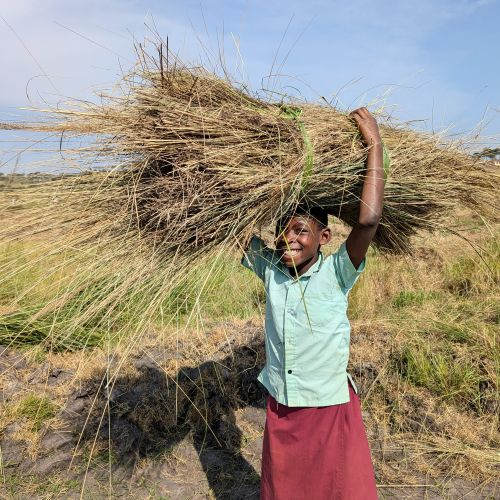
One of the cornerstones of this program is parent volunteers. Twegashe parents together spend a total of about 60 hours each week working in the school farm. Their primary task has been clearing and hoeing to turn grassland into useful farmland. Students contribute, too, mainly by cutting and carrying bundles of grass from untilled parts of campus to serve as mulch and eventually compost to bolster our mostly very depleted soil.
Degraded soil
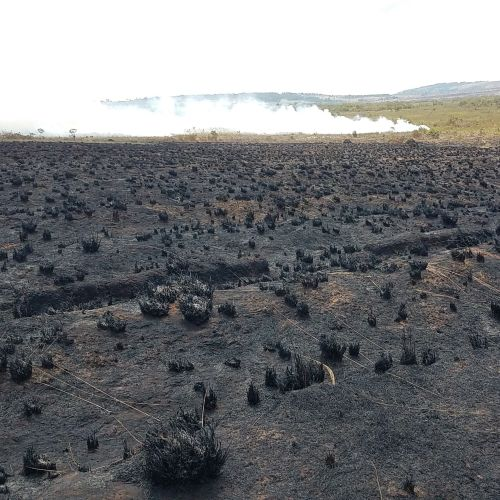
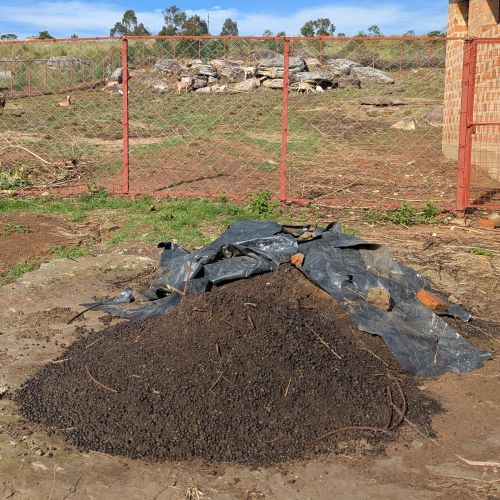
Twegashe School was constructed on village land that has been used over the years as common land for annual crops like groundnuts and yams. Traditional farming practices here are not friendly to the soil. Furrows are dug down hills, rather than along the contours, so the loose, sandy soil is easily eroded. During fallow years, the land is used only for grazing. The grasses not favored by cattle grow tall. In the dry season, grass fires are rampant, turning to ash all the organic matter that could have helped to create new soil.
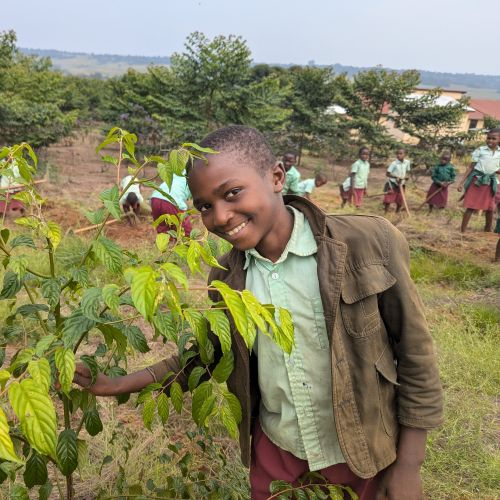
Thanks to the fire line created by our parent volunteers, no fires have entered our 50-acre campus since 2022. Our student environment club members and agriculture staff have planted many trees, which are helping to create soil by dropping leaves. And our twenty-three goats are also helping with droppings of their own.
Soil-enriching trees
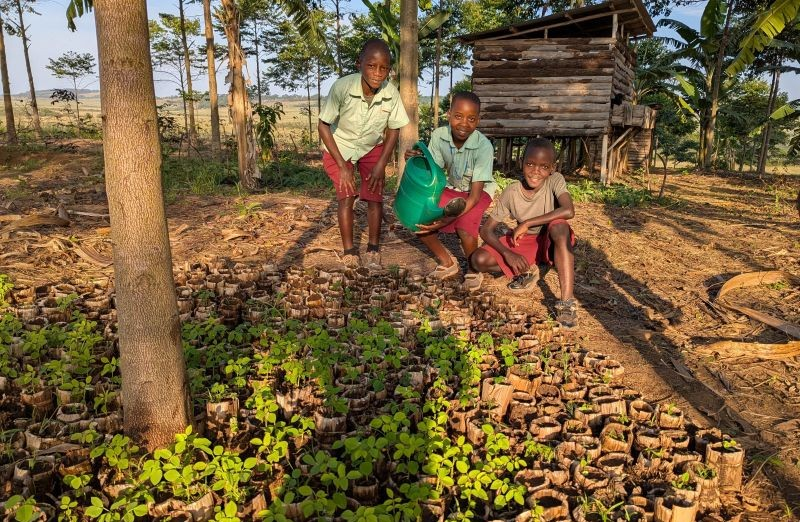
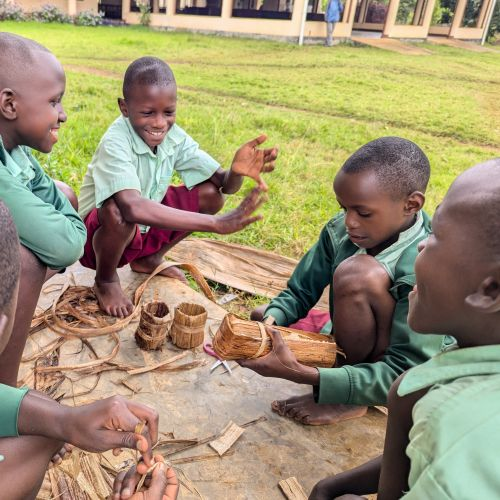
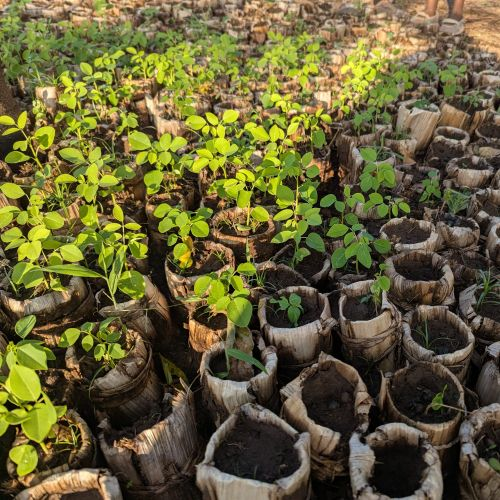
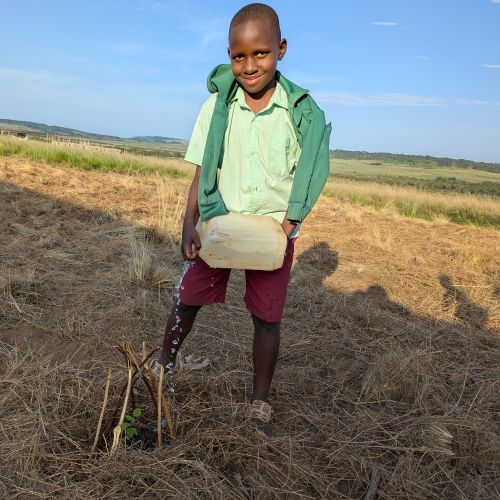
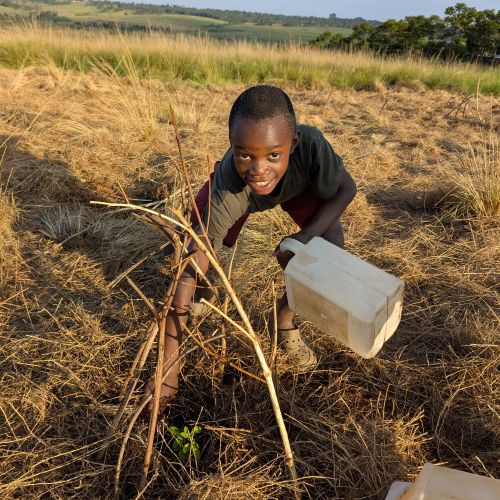
This year we’ve taken another big step in the quest to enrich Twegashe’s soil. As part of their vocational studies class, our fifth graders planted hundreds of seeds of a nitrogen-fixing tree called Gliricidia sepium (commonly known as “mother of cocoa”) in banana leaf pots they had made earlier in the year. Last month, the students started transplanting their tree seedlings into one of the plots recently cleared by parent volunteers. These fast-growing trees have been used in other parts of Tanzania to help reclaim depleted farmland. They can be interspersed with crops to add nitrogen to the soil, and the branches can be cut and used as fodder for livestock or as nutrient-rich mulch for the garden.
A new home for Twegashe’s goats
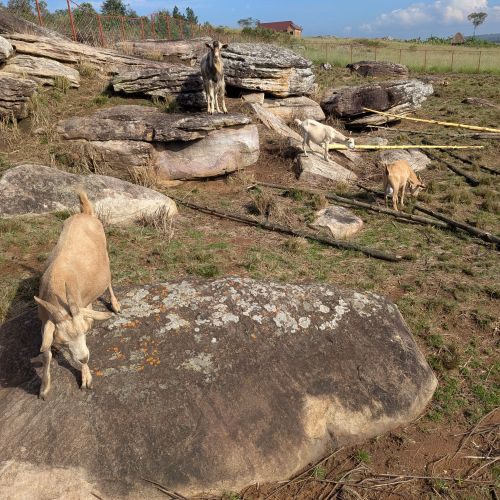
Another big agriculture project this year was the construction of a new home for our goats that allows them to roam freely within a fenced pasture area rather than being confined all day. True to their reputation, the goats were resistant on moving day, but they now seem quite happy in their new home. Unfortunately, but not unexpectedly, the pasture is not large enough to satisfy the voracious appetites of so many goats. The agriculture staff bring them cut grasses and branches as a supplement. Sometimes our security guard, Johannes, takes them out to other parts of campus to find their own dinner in the early evening.
Nutritious fruits and vegetables
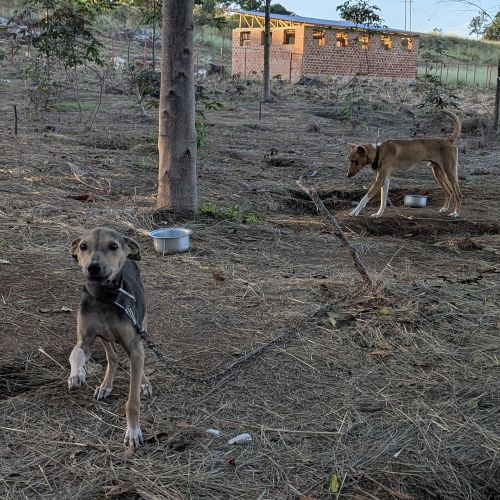
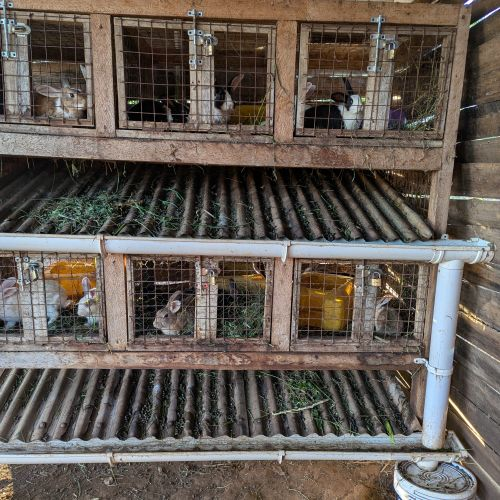
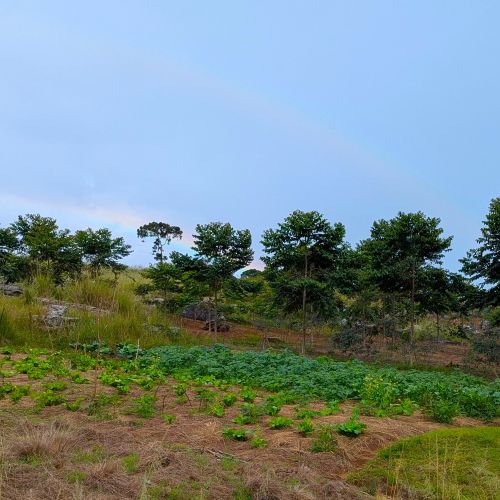
Our priority for planting has been fruits and vegetables to add much-needed vitamins and minerals to our students’ diet. Fruits and vegetables are not highly valued in most Bushasha homes. Meals tend to be a lot of starch, and a small amount of some kind of protein – usually dried beans or small fish. We’ve had mixed success with green, leafy vegetables in the school garden. Initially, poor soil, bugs, and wild grazers like antelope and wild rabbits were a big problem. But now the two dogs that we added last year are discouraging grazers (An added benefit of having dogs is that the students love taking them for walks at lunchtime and after school!). We started a rabbit project to collect rabbit urine – a natural, non-toxic insect repellent – and this seems to be helping to fend off hungry bugs. Early this year, our agricultural team increased their effort in planting various types of greens, and since mid-year we have been reaping the rewards. Students have been eating fresh greens every meal, and we even had enough greens (and pineapple!) to feed over 500 students, parents and staff at our year-end celebration!